


Greenspace Sod Turning and Blessing
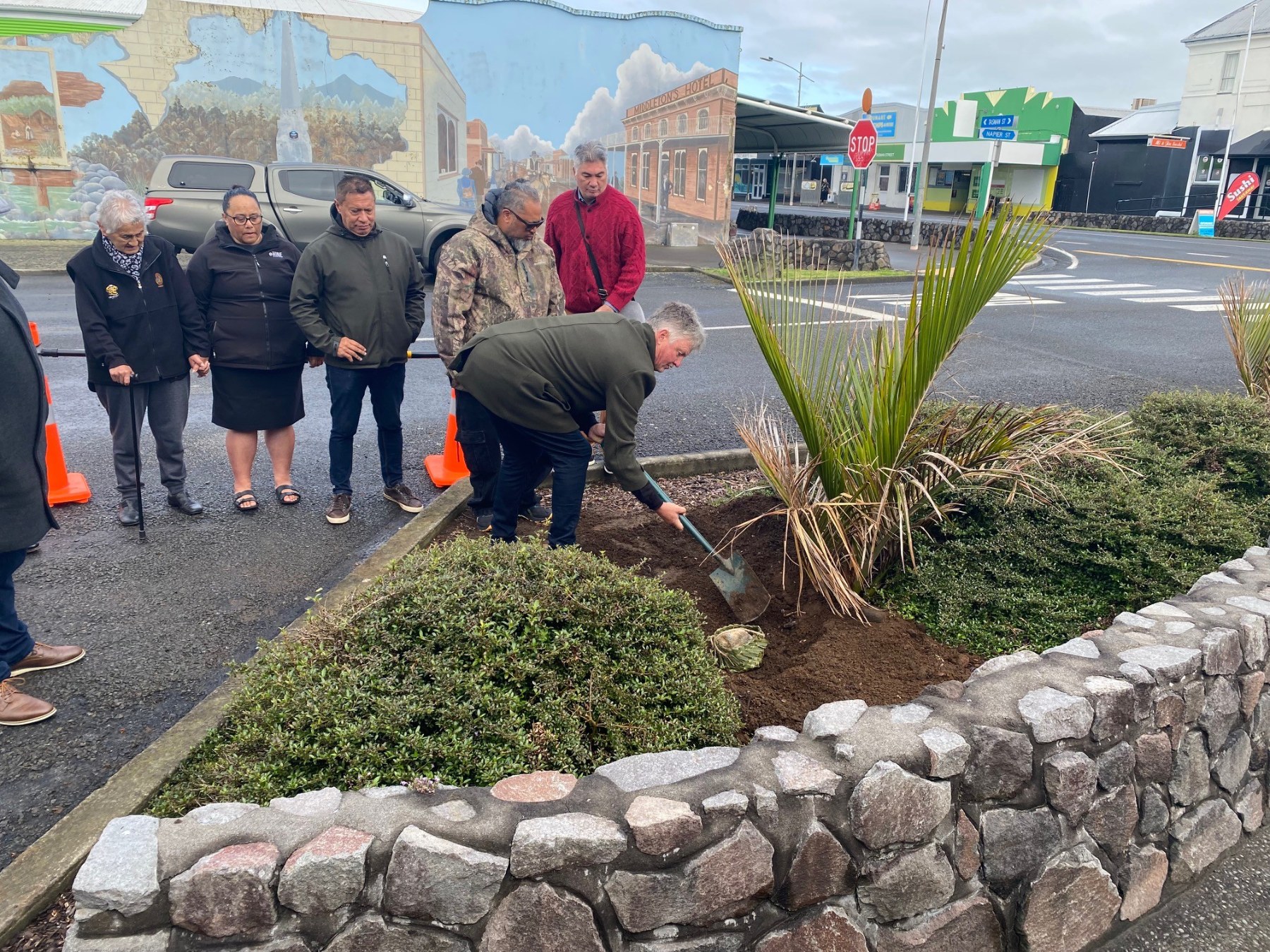
A ground breaking and blessing ceremony was held on Thursday 13 November for the Ōpunakē town centre greenspace project, Te Puna Manawa Ora, marking a significant milestone in the town’s revitalisation journey.
South Taranaki District Councillor, Aarun Langton who dug the first sod says the investment reflects Council’s commitment to fostering connected, vibrant communities where people feel proud to live.
“Council recognised the importance of having vibrant and attractive centres in our smaller towns and allocated $10.6 million from its Long-Term Investment Fund in the 2021–2031 Long-Term Plan to support the transformation of Pātea, Waverley, Ōpunakē, Eltham, and Manaia.”
Langton says the vision for a public space on Napier Street was first raised over a decade ago at a local meeting and later noted in the 2019 Town Masterplan. Since then, it has progressed through the Ōpunakē Town Revitalisation planning process, guided by local members of the co-design team who, over the past two years, have met monthly to shape and champion the project. The co-design team identified the greenspace project as a community priority, one that was strongly reaffirmed through subsequent public consultation. Their work also led to the creation of a Roadmap for future projects.
The name, “Te Puna Manawa Ora”, meaning “the spring of the heart, spirit, and life; a place of health and wellbeing”, was gifted and endorsed by attendees of the Puna Manawa Ora Pou hui, which included local kaumātua. The ceremony, led by Tonga Karena, featured the laying of the mauri stone which was called Te Puna ō te Manganui and was attended by more than 30 people, including representatives from Te Kāhui o Taranaki, Ōrimupiko hapū, the Ōpunakē Town Revitalisation Co-Design Group, South Taranaki District Council elected members, staff, and the wider community.
Physical work on the project will start early in the New Year. Once complete, Te Puna Manawa Ora, will provide a vibrant and central space for gatherings and events, reflecting Ōpunakē’s identity, connection, and aspiration.


