


Natural Processes at the Heart of Pātea Dune Protection
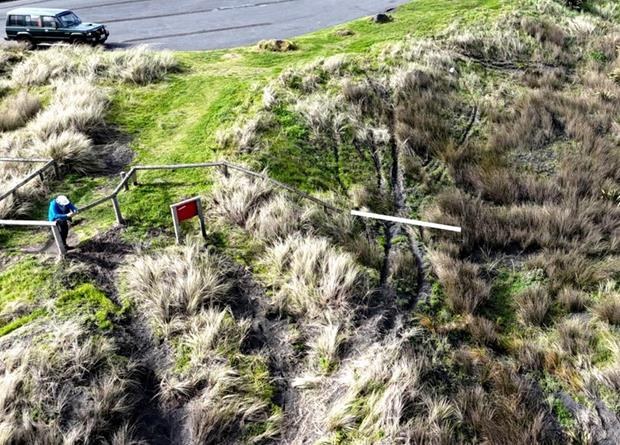
South Taranaki District Council is reinforcing its long‑term approach to protecting the Pātea coastline by using natural processes to stabilise sand dunes, minimise erosion and safeguard beach access for the community.
As part of upcoming maintenance work planned for May, Council will need to temporarily close the upper car park and lookout on Taranaki Road, Pātea, for one day. The exact date has not yet been confirmed, and residents will be notified in advance once it is set.
For decades, strong winds and shifting sands have caused significant dune instability at Pātea Beach. In the 1980s, wind‑blown sand even encroached into nearby homes and roads, partially burying sections in the beach settlement. Council’s environment and sustainability manager, Cindy Koen, says controlled placement of clean greenwaste remains one of the most effective tools for strengthening dune systems in this high‑energy coastal environment.
“Clean greenwaste helps trap windblown sand, rebuilds dune shape, and provides the structure native plants need to establish. This method is scientifically supported, environmentally safe, and essential for protecting the integrity of the dune system,” says Cindy.
Long‑term trials and monitoring show that greenwaste plays a crucial role in preventing blowouts and reducing sand drift, which can otherwise place significant burden on nearby homes, public spaces and infrastructure. Stabilised dunes also support local ecology and improve safe access to the beach.
Since 2016, greenwaste placement at the site has followed strict controls. Today, only uncontaminated material from authorised transfer stations in Hāwera and Pātea can be used, and it is applied solely in approved areas under a monitored resource consent.
“This is no longer a dumping site. The historic issues with illegal greenwaste and general rubbish were addressed years ago. What happens now is carefully managed, clean, and fully consented,” says Cindy.
Council’s resource consent includes 16 conditions covering environmental monitoring, placement practices and safeguards against issues such as odour, runoff, contamination or erosion effects. The Taranaki Regional Council regularly monitors compliance.
Placement on Bourkes Lookout Road was completed in September 2025, and work is now focused on the top lookout area. On placement days, only the immediate work zone will be temporarily coned off for safety, with no broader access restrictions expected.
“Our coastal communities deserve confidence that dune management is both responsible and effective. We’re committed to transparency and to using the best available methods to protect Pātea Beach for future generations,” she says.
By mimicking natural dune‑building processes, the approach reduces sand encroachment into residential areas, minimises collapse risks in weakened dune sections, and supports native vegetation to take over long‑term stabilisation.
“The community has a long history of caring for these dunes. Today’s approach builds on that legacy but with stronger environmental safeguards and a focus on long‑term resilience,” says Cindy.
The South Taranaki District Council will continue to monitor the site closely and work with iwi, residents and coastal groups to support a healthier and more stable coastline at Pātea Beach.


